Choosing a Risk Management Information System (RMIS) involves stakeholders, workflows, reporting, compliance, and budget.
That’s why organizations invest time and effort in choosing a platform.
But what happens when the system, once implemented, does not deliver the value you expected?
It happens more often than many organizations openly discuss.
At some point, leadership and risk teams begin asking a difficult but important question:
Do we continue working around the system’s limitations—or is it time to consider a change?
Why Organizations Stay Longer Than They Should
When an RMIS falls short, most organizations do not immediately look for a replacement. In fact, many stay with underperforming systems far longer than they intended.
This hesitation is understandable.
Changing platforms can feel disruptive, expensive, and uncertain, raising concerns about data migration, timelines, disruption, training, budget, and potential new issues.
- Data migration complexity
- Implementation timelines
- Internal disruption to staff and processes
- Training users on a new system
- Budget considerations
- Fear of trading one problem for another
These are all valid concerns.
However, they often overshadow another important consideration: the ongoing cost of staying with a system that no longer fits your needs.
The Hidden Cost of Staying
Organizations often focus on the visible costs of switching while underestimating the invisible costs of remaining where they are.
Those costs tend to accumulate gradually:
- Manual workarounds become part of daily operations
- Reporting confidence declines due to inconsistent data
- Follow-up tasks fall through the cracks
- Departments create their own separate processes
- Users disengage and avoid the system whenever possible
- Leadership lacks timely visibility into key metrics
No single issue may seem severe on its own.
Together, however, they can significantly reduce the value of your RMIS investment and weaken decision-making across the organization.
When “Good Enough” Becomes Expensive
A common reason organizations stay with a legacy or underperforming RMIS is simple:
“We’ve made it work.”
But making it work often means accepting hidden inefficiencies such as:
- Duplicate data entry
- Extra administrative effort
- Slower claim handling or incident response
- Limited reporting capabilities
- Delayed access to information
- Increased dependence on a few internal power users
Over time, these inefficiencies create real costs—not only in labor hours, but in missed opportunities, delayed decisions, and preventable claim expenses.
What once felt manageable can quietly become expensive.
Understanding the Real Risk of Switching
Switching RMIS platforms does require effort. But it should not be confused with chaos.
When handled correctly, a transition is a structured business initiative—not a disruptive event.
A successful implementation typically includes:
- Clearly defined goals and workflow requirements
- A focused data migration strategy (moving what matters most)
- Realistic timelines and milestones
- Phased rollouts when appropriate
- Targeted user training based on actual responsibilities
- Dedicated post-launch support
With the right planning and vendor partnership, the risks of switching become manageable, measurable, and temporary.
A Better Question to Ask
Many organizations frame the decision this way:
“Is switching too risky?”
A more strategic question is:
“Which creates more risk over the next three to five years—staying with the current system or making a change?”
That shift in perspective often changes the conversation.
Because the true risk is not always found in change. Sometimes it is found in standing still.
What to Look for in a New RMIS
If you decide to explore alternatives, focus on factors that reduce long-term risk and improve long-term value.
Look for a platform that offers:
Configurable Workflows
Adapt the system to your operations to enable smoother processes without requiring excessive custom development, saving time and resources.
Clear, Transparent Pricing
Understand total cost, including support, integrations, upgrades, and add-ons, to prevent budget surprises and make informed financial decisions.
Practical Implementation Planning
A defined process with realistic expectations and clear accountability ensures smoother implementation and fewer project delays.
Smart Data Conversion
A thoughtful migration strategy focused on critical historical and active data ensures essential information is preserved and accessible from day one.
Responsive Support
Access to knowledgeable teams who understand your environment and priorities helps resolve issues quickly and ensures ongoing system success.
Meaningful Reporting and Visibility
Dashboards and analytics help leadership make informed decisions by providing real-time insights for better risk management.
Is It Time to Reevaluate?
No RMIS platform is perfect.
But over time, the difference becomes increasingly clear.
Many organizations only recognize the limitations of their current system after years of adapting around it.
That hindsight can be valuable—if it helps inform a better decision moving forward.
If your current RMIS demands frequent workarounds, leads to uncertain reporting, or cannot support your key workflows, now is the time to actively reevaluate your options—don’t wait until costs accumulate further.
Not every situation requires a change.
But every organization benefits from understanding two important realities:
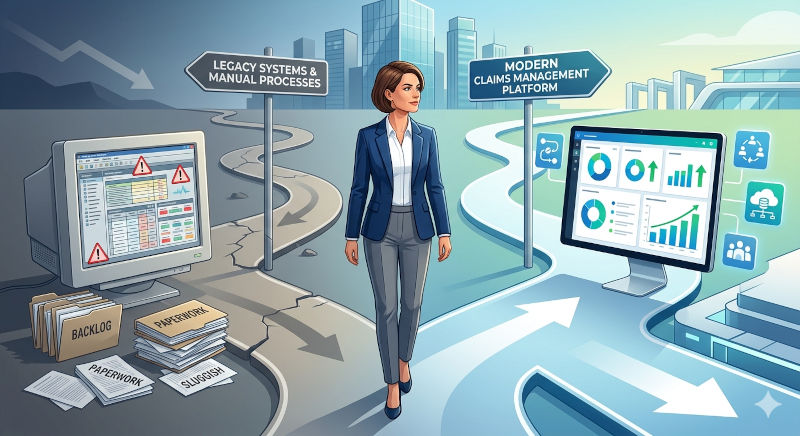
The risk of switching
vs.
The cost of staying
Make a deliberate choice: weigh the risks of switching against the costs of staying, and take decisive action for your organization’s future.

Paul Kofman, President of Recordables, has been providing software solutions in Risk Management, Claims Management, Disability Management, Safety, and Occupational for more than 30 years.