
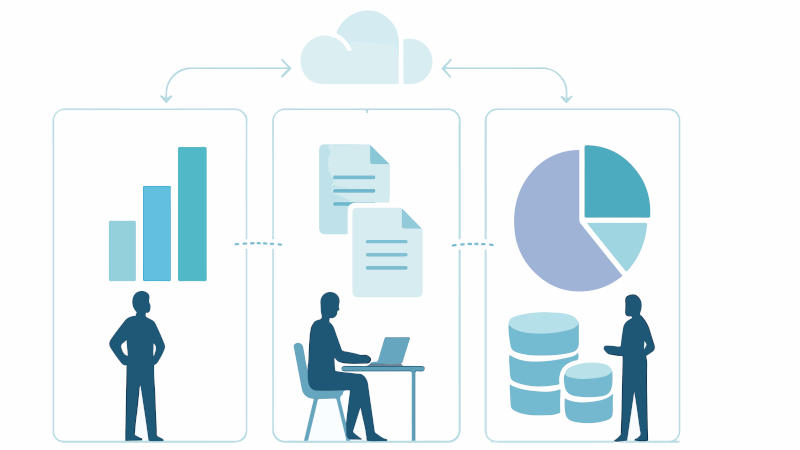
Many organizations treat safety, claims management, and case management as separate functions.
These functions often reside in different departments.
They frequently use separate systems.
In some cases, these departments do not share information. While this may seem manageable, it often creates gaps that increase costs, cause delays, and lead to missed opportunities.
The Disconnect Starts at the Beginning
Everything begins with an incident.
An employee gets injured.
A vehicle accident occurs.
Property damage is reported.
At that moment, three things should happen:
1. The incident is documented accurately
2. The appropriate parties are notified
3. Early action is taken to manage the situation
When safety, claims, and case management are disconnected, the process breaks down. Safety may document the incident, but claims often lack complete or timely information, and case management is not engaged early. As a result, valuable time is lost before all parties are aligned.
Why the First 24 Hours Matter
The initial response to an incident is critical in determining the outcome.
Delays in reporting or incomplete information can lead to:
- Higher claim costs
- Longer claim durations
- Increased likelihood of litigation
- Missed opportunities for early intervention
Industry research shows that claims reported even a few days late can increase total claim costs by 10–20% or more and extend claim duration¹.
When systems and workflows are not connected, even minor delays can have a measurable impact.
Where the Gaps Typically Occur
Organizations dealing with separate systems often experience:
Incomplete Information
Details captured during the initial incident may not fully transfer to the claims process, requiring re-entry or follow-up.
Delayed Reporting
Incidents may sit in email inboxes, spreadsheets, or paper forms before being formally reported.
Lack of Visibility
Risk managers may not have a clear, real-time view of what is happening across departments.
Missed Case Management Opportunities
Without early visibility, case management is often introduced later, after costs have already escalated.
The Hidden Cost of Disconnection
These gaps do not just create inefficiencies; they directly impact outcomes.
Fragmented workflows result in slower claim resolution, higher costs, unreliable data, and more time spent on processes rather than on risk management.
Industry experience also shows that early intervention, especially through timely reporting and case management, can significantly reduce both claim duration and overall cost².
Over time, these small breakdowns across many claims increase the total cost of risk.
A More Effective Approach: Connected Workflows
Organizations now see safety, claims, and case management as part of a single workflow.
To improve effectiveness, organizations should use a single point of entry for reporting, provide immediate visibility to all stakeholders, engage case management early when needed, and ensure consistent data flow from incident to resolution.
When these elements are connected:
- Reporting becomes faster and more accurate
- Response times improve
- Opportunities for early intervention increase
- Outcomes become more predictable
It’s Not About More Complexity, It’s About Alignment
A common misconception is that improving these processes requires adding more systems or complexity.
Often, the opposite is true: simplicity is more effective.
The most effective environments are those where:
- Workflows are straightforward
- Information is captured once and used throughout the process
- Teams operate from the same source of truth
This reduces administrative burden while improving overall effectiveness.
A Practical Perspective
In working with organizations across both the public and private sectors, a consistent pattern
emerges:
Most are not seeking additional software; they want a more practical way to manage risk.
risk.
Organizations can bring together claims, safety, and case management in ways that align with actual workflows while remaining flexible.
Some organizations may need a comprehensive solution, while others may start with a specific area, such as workers’ compensation or liability, and expand over time.
The ability to adopt only what is needed, while maintaining flexibility to expand and integrate additional components as requirements evolve, can make a meaningful difference in both implementation and long-term success.
Equally important is the ability to integrate with existing systems such as HR, payroll, TPAs, and other data sources, without forcing rigid workflows or unnecessary complexity.
In practice, organizations benefit most from environments that support connected workflows and offer the flexibility to evolve over time, rather than requiring everything to be implemented at once.
Final Thought
Most organizations don’t intentionally create disconnected processes—it often happens over time
But the impact is real.
When safety, claims, and case management operate in silos, the result is delayed action, incomplete information, and higher costs.
Connecting these functions through aligned workflows and shared visibility can greatly improve efficiency and outcomes.
At Recordables, we have consistently seen that organizations benefit most from a practical, connected approach that allows them to adopt what they need today while maintaining the flexibility to expand and integrate over time.
¹ National Council on Compensation Insurance (NCCI), industry research on claim reporting lag and cost impact, supported by carrier and actuarial studies across workers’ compensation programs.
² Industry research and carrier studies (including Liberty Mutual Workplace Safety Index and similar analyses) consistently show that early reporting and intervention improve claim outcomes and reduce overall costs.

Paul Kofman, President of Recordables, has been providing software solutions in Risk Management, Claims Management, Disability Management, Safety, and Occupational for more than 30 years.